Accommodation near Desert Botanical Garden
Search results are centered on the garden address; verify the property’s current distance and transport options before booking.
Compare stays on Booking.com (opens in a new tab)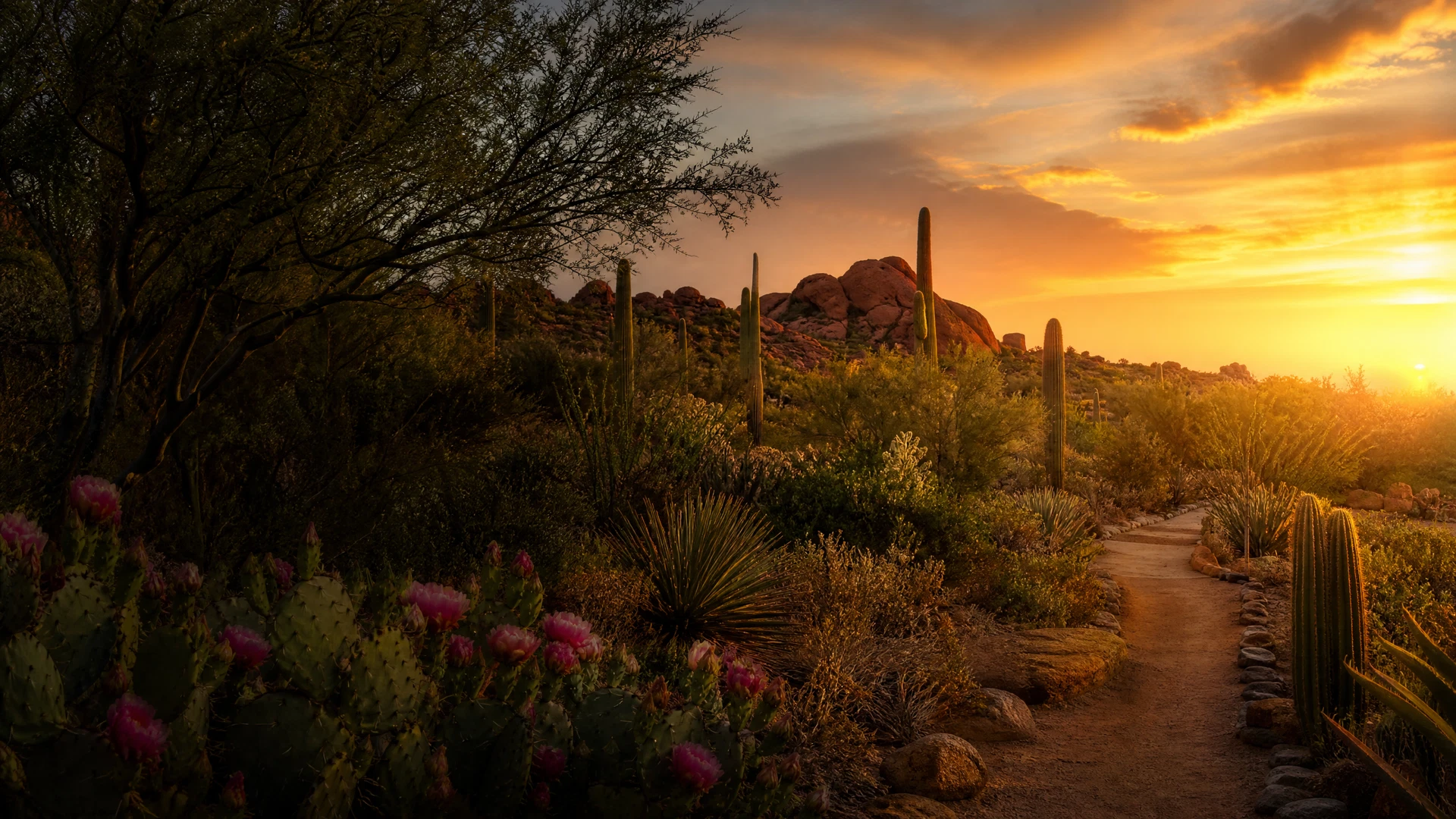
Arizona · Est. 1939
50,000 plants, 140 acres, and the best wildflower season in America
Founded
1939
Size
140 acres
Hardiness Zone
USDA Zone 9b
Best Season
October–April
The Desert Botanical Garden sits in Phoenix's Papago Park surrounded by the red sandstone Papago Buttes, and it makes a compelling case that desert plants are among the most dramatic on earth. Founded in 1939 by the Arizona Cactus and Native Flora Society, it has grown to 140 acres housing over 50,000 plants representing more than 4,000 taxa from arid regions worldwide. The saguaro cacti alone — some over 150 years old — are worth the trip. In March and April, when the Sonoran Desert wildflower season peaks, the garden becomes one of the most visually spectacular places in the United States. In December, the Las Noches de las Luminarias event transforms the trails into something genuinely magical.
The Desert Botanical Garden was founded in 1939 by the Arizona Cactus and Native Flora Society, with Swedish botanist Gustaf Starck as its first director. The garden was established in Papago Park, then on the outskirts of Phoenix, to preserve and display the remarkable plant life of the Sonoran Desert. Over the following decades it expanded to 140 acres and developed one of the world's most significant collections of arid-land plants. It is accredited by the American Alliance of Museums and is a member of the American Public Gardens Association.
Signature Feature
The Desert Discovery Loop Trail is the garden's signature walk: a paved path winding through towering saguaro cacti — some over 150 years old and 40 feet tall — palo verde trees, and seasonal wildflower displays, all against the backdrop of the red sandstone Papago Buttes. In spring, when the wildflowers bloom and the cacti flower, the trail offers a sensory experience that is difficult to describe and impossible to forget. Visit before 9 a.m. to have it largely to yourself.
Bloom-planning note
The strongest overall display is typically October–April (mild weather, wildflower season). That window combines the garden's major collections with the regional sequence of flowering trees, bulbs, perennials, and seasonal color.
In the broader Desert Southwest season, the most comfortable and color-rich period is often late winter through spring; summer rewards early visitors with cacti and monsoon-season blooms.
Timing changes with weather, elevation, and individual collection conditions. Confirm bloom progress directly with the garden before planning a special visit.
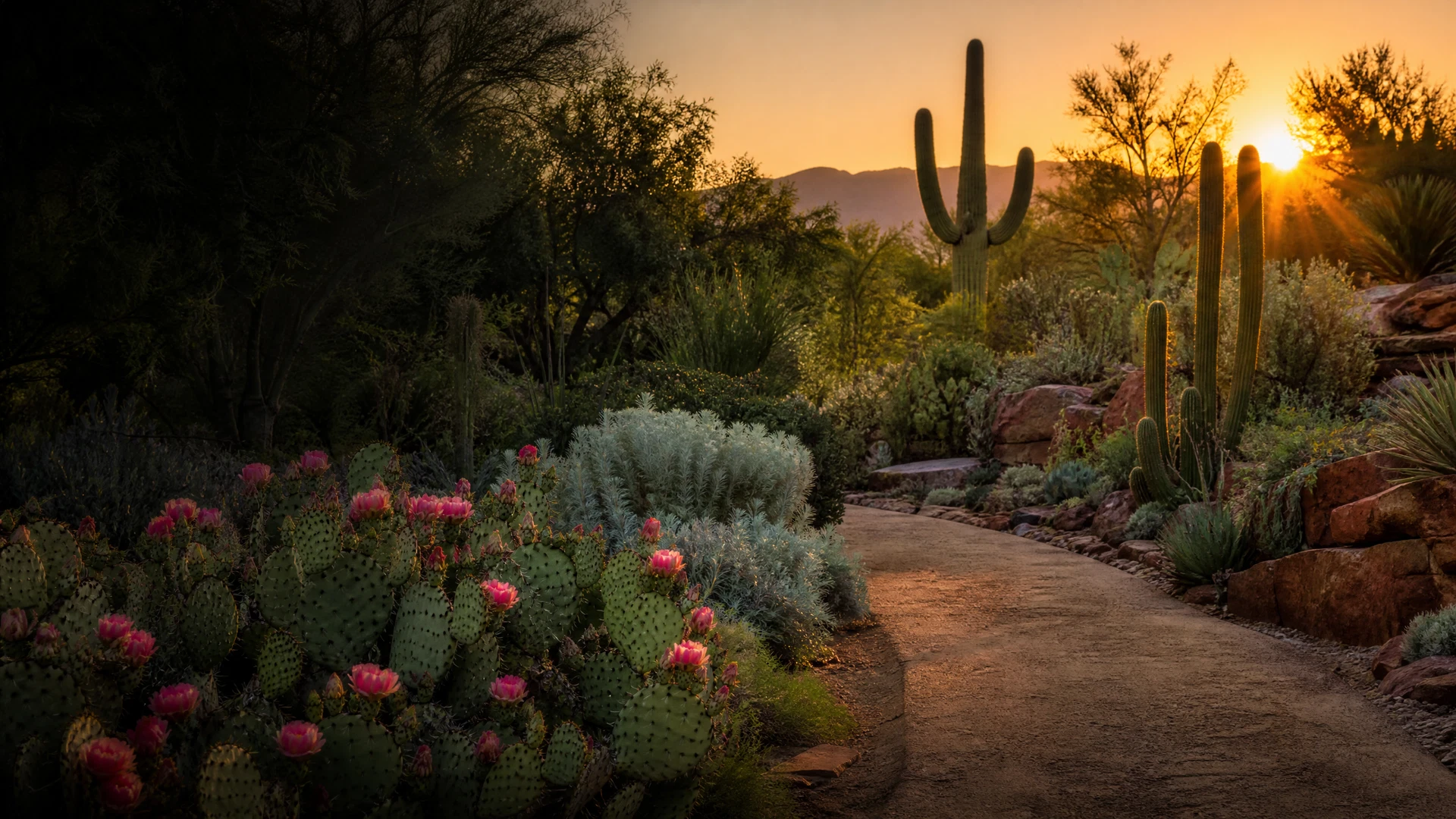
Saguaro cacti along the Desert Discovery Loop Trail
Wildflower bloom in the desert
Luminarias during Las Noches de las Luminarias
Native plants including saguaros, barrel cacti, and desert wildflowers.
Ethnobotanical exhibits showing how native peoples used desert plants.
Seasonal exhibit with hundreds of butterflies and nectar-rich plants.
Rare and unusual succulents from deserts worldwide.
Plan Before You Go
Daily 8am–8pm (seasonal variations)
Best seasonal window: October–April (mild weather, wildflower season)
Free on-site parking
Check the official visit page for event-day parking changes and arrival instructions.
Fully ADA-accessible; paved trails throughout
Contact the garden before visiting to discuss route conditions, mobility equipment, or support needs.
Visitor details are reviewed from the garden's public information and were last checked May 2026. Policies, prices, and route conditions can change; confirm final arrangements directly with the garden.
Editorial Standards
This profile was prepared by the BotanicalGardens.blog editorial research desk using official garden pages and other named sources where available. Hours, admission, and access details can change; confirm them with the garden before a special trip. This profile was last reviewed May 2026. If you notice an inaccuracy, please contact us.
October–April (mild weather, wildflower season)
Address
1201 N Galvin Pkwy, Phoenix, AZ 85008
Phone
(480) 941-1225
Hours
Daily 8am–8pm (seasonal variations)
Admission
Adults $30, Seniors $27, Students $15, Children $15
Parking
Free on-site parking
Accessibility
Fully ADA-accessible; paved trails throughout
For an overnight visit, compare options around the garden address and choose the route, accessibility features, and cancellation terms that fit your plans.
Search results are centered on the garden address; verify the property’s current distance and transport options before booking.
Compare stays on Booking.com (opens in a new tab)