The Lone Star State's Botanical Treasures: A Guide to Texas Gardens
BotanicalGardens.blog Editorial Team
Editorial research & source verification
Texas & Southern Plains seasonal guide
Texas Month-by-Month Bloom Calendar
Spring is the most reliable broad bloom period, while heat-tolerant displays and native plants carry gardens into summer and a second fall season.
Garden color at a glance
Typical regional timingJan
Early bulbs, flowering trees, and late-winter wildflowers.
Feb
Early bulbs, flowering trees, and late-winter wildflowers.
Mar
Peak spring: bluebonnets, wildflowers, roses, irises, and flowering shrubs.
Apr
Peak spring: bluebonnets, wildflowers, roses, irises, and flowering shrubs.
May
Peak spring: bluebonnets, wildflowers, roses, irises, and flowering shrubs.
Jun
Heat-tolerant color: cacti, salvias, crape myrtles, and pollinator beds.
Jul
Heat-tolerant color: cacti, salvias, crape myrtles, and pollinator beds.
Aug
Heat-tolerant color: cacti, salvias, crape myrtles, and pollinator beds.
Sep
Fall wildflowers, asters, grasses, late roses, and seedheads.
Oct
Fall wildflowers, asters, grasses, late roses, and seedheads.
Nov
Fall wildflowers, asters, grasses, late roses, and seedheads.
Dec
Evergreens, winter annuals, and early cool-season blooms.
Bloom schedules shift with elevation, microclimate, rainfall, and the previous winter. Use this as a regional planning guide, then check each garden's official bloom tracker or event calendar before making a special trip.
In This Guide
Texas's Garden Legacy
Texas is the only state where you can drive from a Chihuahuan Desert cactus garden to a humid East Texas pine forest in the same afternoon — a fact that makes it one of the most botanically interesting states in the country. Ten distinct ecoregions, USDA hardiness zones ranging from 6a in the Panhandle to 10b on the Gulf Coast, and a native flora that includes everything from bluebonnets to bald cypress. The Lady Bird Johnson Wildflower Center in Austin, established in 1982 by the former First Lady herself, is the national authority on native plants. The San Antonio Botanical Garden's subterranean Lucile Halsell Conservatory is one of the most architecturally striking greenhouse complexes in the world. The Fort Worth Botanic Garden, opened in 1934, is the oldest in Texas and still one of the best.
The defining characteristic of Texas horticulture is a hard-won pragmatism about water. In a state where drought is not an exception but a recurring condition, the emphasis on native and drought-tolerant plants is not just an aesthetic choice — it's a survival strategy. The Wildflower Center's research programs have shaped native plant policy across the country. The result is a garden culture that feels distinctly Texan: ambitious in scale, practical in its plant choices, and genuinely proud of the landscape it has inherited.
Texas botanical gardens collectively welcome millions of visitors annually and contribute to conservation research that extends well beyond state lines. The Wildflower Center maintains the most comprehensive native plant database in North America. The Dallas Arboretum's 66 acres on White Rock Lake offer some of the most photographed seasonal displays in the South. Taken together, Texas's public gardens make a compelling case that the state's horticultural ambitions match its geographical ones.
Climate & Plant Diversity
Texas's climate is not one climate — it is at least four, stacked side by side. The Panhandle gets hard freezes and occasional blizzards. The Gulf Coast is subtropical and frost-free most years. The Hill Country sits in between, with limestone soils and a semi-arid character that suits live oaks and bluebonnets perfectly. East Texas is humid enough for azaleas and loblolly pines. Each region has developed a garden culture shaped by its specific conditions, which is why a visit to the Fort Worth Botanic Garden feels entirely different from a visit to the Corpus Christi Botanical Gardens — even though they're in the same state.
USDA hardiness zones in Texas span from 6a in the northern Panhandle to 10b along the southernmost Gulf Coast — a range of four full zones within a single state. That spread allows Texas gardens to grow cold-hardy pecans in the north and tropical heliconias in the south. Native plants are the backbone of Texas horticulture: adapted over millennia to the state's heat, drought, and alkaline soils, they require less water, less maintenance, and provide more ecological benefit than almost any introduced species. The bluebonnet is not just a pretty roadside plant — it is a nitrogen-fixer that actively improves the soil it grows in.
| Region | USDA Zones | Climate Characteristics | Notable Native Plants |
|---|---|---|---|
| East Texas Pineywoods | 8a-9a | Humid subtropical, high rainfall, acidic soils | Loblolly Pine, Sweetgum, Southern Magnolia, Azaleas |
| Central Texas (Hill Country) | 8a-8b | Subhumid, limestone soils, hot summers, mild winters | Live Oak, Ashe Juniper, Texas Redbud, Bluebonnets |
| South Texas Plains | 9a-10a | Semi-arid to subtropical, hot, dry, alkaline soils | Mesquite, Prickly Pear Cactus, Texas Sage, Cenizo |
| Trans-Pecos (West Texas) | 7a-8b | Arid, desert climate, extreme temperatures, rocky soils | Agave, Yucca, Ocotillo, various Cacti species |
The Dallas Arboretum sits on 66 acres along White Rock Lake, and it has a particular gift for spectacle. Dallas Blooms — the largest spring floral festival in the Southwest — fills the grounds with 500,000 tulips, daffodils, and pansies every March. The Rory Meyers Children's Adventure Garden, opened in 2013, is one of the most sophisticated children's science gardens in the country: 17 indoor and outdoor galleries, a cloud forest, and a 40-foot-tall globe made of living plants. The DeGolyer Estate's 1939 Spanish Colonial Revival mansion anchors the grounds with the kind of architectural gravitas that makes a garden feel like a destination rather than a detour.
Historical Note: The majority of the grounds were once part of a 44-acre dairy farm, "Rancho Encinal," purchased by geologist Everette Lee DeGolyer and his wife Nell Goodrich DeGolyer. Their 1939 Spanish Colonial Revival home, the DeGolyer Estate, now forms a significant part of the arboretum. In 1980, the adjacent 22-acre Alex Camp House was acquired, further expanding the garden's footprint. The Dallas Arboretum officially opened to the public in 1984, fulfilling its mission to provide a beautiful and educational green space for the community. [Dallas Arboretum and Botanical Garden - Wikipedia]
The Fort Worth Botanic Garden has been doing this since 1934 — which makes it the oldest major botanical garden in Texas, and one of the oldest in the South. The Japanese Garden, added in 1970, is a 7.5-acre masterpiece of koi ponds, stone lanterns, and a moon-viewing deck that feels genuinely transported from Kyoto. The Rose Garden holds over 2,500 varieties across 3.5 acres. The Conservatory houses tropical plants in a climate-controlled environment that offers a particularly welcome escape during Fort Worth's August heat. Admission to the main gardens is free, which makes it one of the best-value botanical experiences in the state.
Historical Note: The Fort Worth Botanic Garden's origins trace back to 1912 with the development of the 37.5-acre Rock Springs Park. The garden officially opened in 1934, with significant contributions from the landscape architecture firm Hare & Hare, who designed many of its early features, including the horticulture building and the Horseshoe Garden. In 2009, the garden was added to the National Register of Historic Places, recognizing its enduring historical and botanical importance. [Fort Worth Botanic Garden - Wikipedia]
The Lucile Halsell Conservatory alone is worth the trip to San Antonio. Designed by architect Emilio Ambasz and opened in 1988, it is a series of climate-specific greenhouses built largely underground — a subterranean complex that keeps the surrounding landscape uninterrupted while housing a tropical palm house, a fern grotto, and a desert pavilion. Above ground, the Native Texas Area traces the state's ecological diversity from the East Texas Pineywoods to the South Texas Plains across a single walkable path. The Family Adventure Garden, opened in 2017, is one of the most thoughtfully designed children's nature spaces in the region.
Historical Note: The concept for the San Antonio Botanical Garden emerged in the 1940s from the efforts of Mrs. R. R. Witt and Mrs. Joseph Murphy, who spearheaded the San Antonio Garden Center. A master plan for a city botanical center was developed in the late 1960s on a former limestone quarry site. Groundbreaking occurred in 1976, and the garden officially opened its gates on May 3, 1980. Major expansions include the 1988 opening of the Emilio Ambasz-designed Lucile Halsell Conservatory and an 8-acre expansion in 2017. [San Antonio Botanical Garden - Wikipedia]
Lady Bird Johnson Wildflower Center
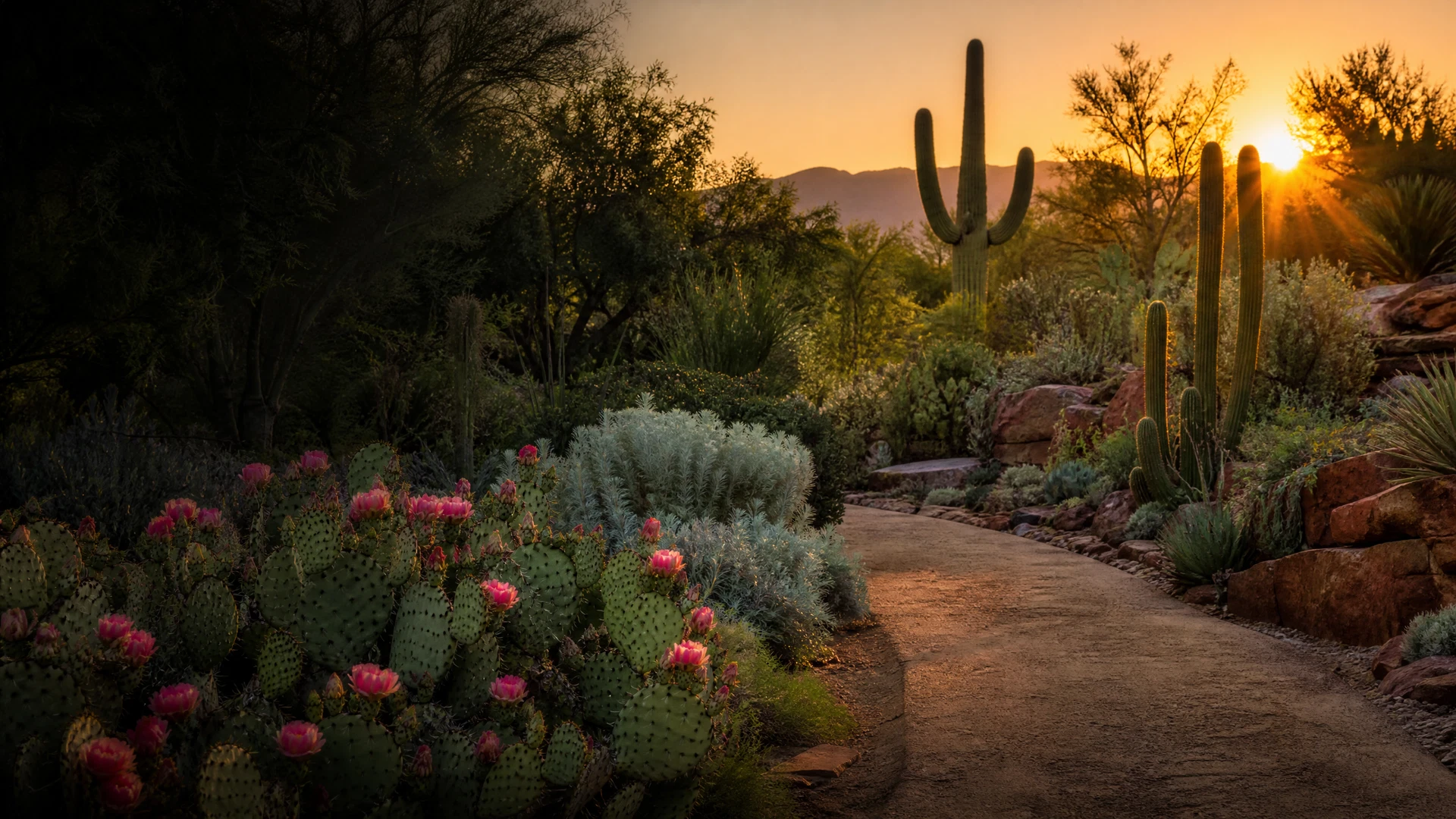
The Lady Bird Johnson Wildflower Center, located in Austin, is the state botanical garden and arboretum of Texas, dedicated to inspiring the conservation of native plants. Founded by Lady Bird Johnson and Helen Hayes in 1982, the center showcases over 900 species of native Texas plants across its 284 acres, featuring both cultivated gardens and natural landscapes. It serves as a national resource for native plant information and promotes sustainable landscaping practices through its extensive research and educational programs.
The center's commitment to native flora is evident in its diverse collections, including the Luci and Ian Family Garden and the Mollie Steves Zachry Texas Arboretum. Visitors can explore miles of walking trails, interactive exhibits, and participate in various workshops and events focused on ecological restoration and biodiversity. The Wildflower Center is not just a garden; it's a vibrant hub for environmental stewardship, offering a unique opportunity to experience the beauty and ecological importance of Texas's indigenous plant life.
Historical Note: The Wildflower Center was established in 1982 by former First Lady Lady Bird Johnson and actress Helen Hayes, driven by their shared passion for native plants and environmental conservation. It became part of The University of Texas at Austin in 1997, solidifying its role as a leading institution for native plant research and education. The center's mission continues to honor Lady Bird Johnson's legacy of beautification and environmental protection. [Lady Bird Johnson Wildflower Center - Wikipedia]
- Location: Austin, Texas
- Founded: 1982
- Acreage: 284 acres
- Best For: Native Plant Enthusiasts & Conservation Education
- Admission: Fee applies
Quick Comparison Table
| Name | Location | Founded | Acreage | Admission | Best For |
|---|---|---|---|---|---|
| Dallas Arboretum and Botanical Garden | Dallas, Texas | 1984 | 66 acres | Admission fee applies | Family Fun & Seasonal Events |
| Fort Worth Botanic Garden | Fort Worth, Texas | 1934 | 120 acres | Admission fee applies to some gardens | Tranquil Escapes & Diverse Collections |
| San Antonio Botanical Garden | San Antonio, Texas | 1980 | 41 acres | Admission fee applies | Unique Architecture & Native Landscapes |
| Lady Bird Johnson Wildflower Center | Austin, Texas | 1982 | 284 acres | Fee applies | Native Plant Enthusiasts & Conservation Education |
Visitor Planning Tips
Hydrate and Protect: Texas summers are notoriously hot. Always carry plenty of water, wear wide-brimmed hats, and apply sunscreen generously, even on overcast days. Many gardens offer shaded areas and water fountains, but personal hydration is key for an enjoyable visit.
Timing is Everything: Spring (March-May) is prime wildflower season, offering spectacular displays of bluebonnets and other native blooms. Fall (September-November) brings milder temperatures and vibrant autumn colors in some regions. Visiting early in the morning or late in the afternoon during warmer months can help avoid peak heat and crowds.
Embrace Native Flora: Texas gardens excel at showcasing native plants adapted to the local climate. Take time to appreciate these resilient species, which often require less water and maintenance. Many gardens provide educational signage about native plant benefits and identification.
Check Ahead for Events: Texas botanical gardens frequently host special events, workshops, and festivals, especially during spring and fall. Check their official websites before your visit for information on guided tours, plant sales, art exhibits, or family-friendly activities that can enhance your experience.
Frequently Asked Questions
References
BotanicalGardens.blog Editorial Team
Editorial research & source verification
About the editorial team
BotanicalGardens.blog publishes as an editorial team. We do not claim individual credentials or first-hand visits unless a page identifies and substantiates them. Our process prioritizes official garden records, public institutions, and clearly named sources.
Editorial verification
This guide is researched from official garden pages, public institutions, and other named sources where available. Visitor details can change; confirm hours, ticketing, and accessibility directly with the garden before a special trip.
Read our editorial standards or report a correction at corrections@botanicalgardens.blog.