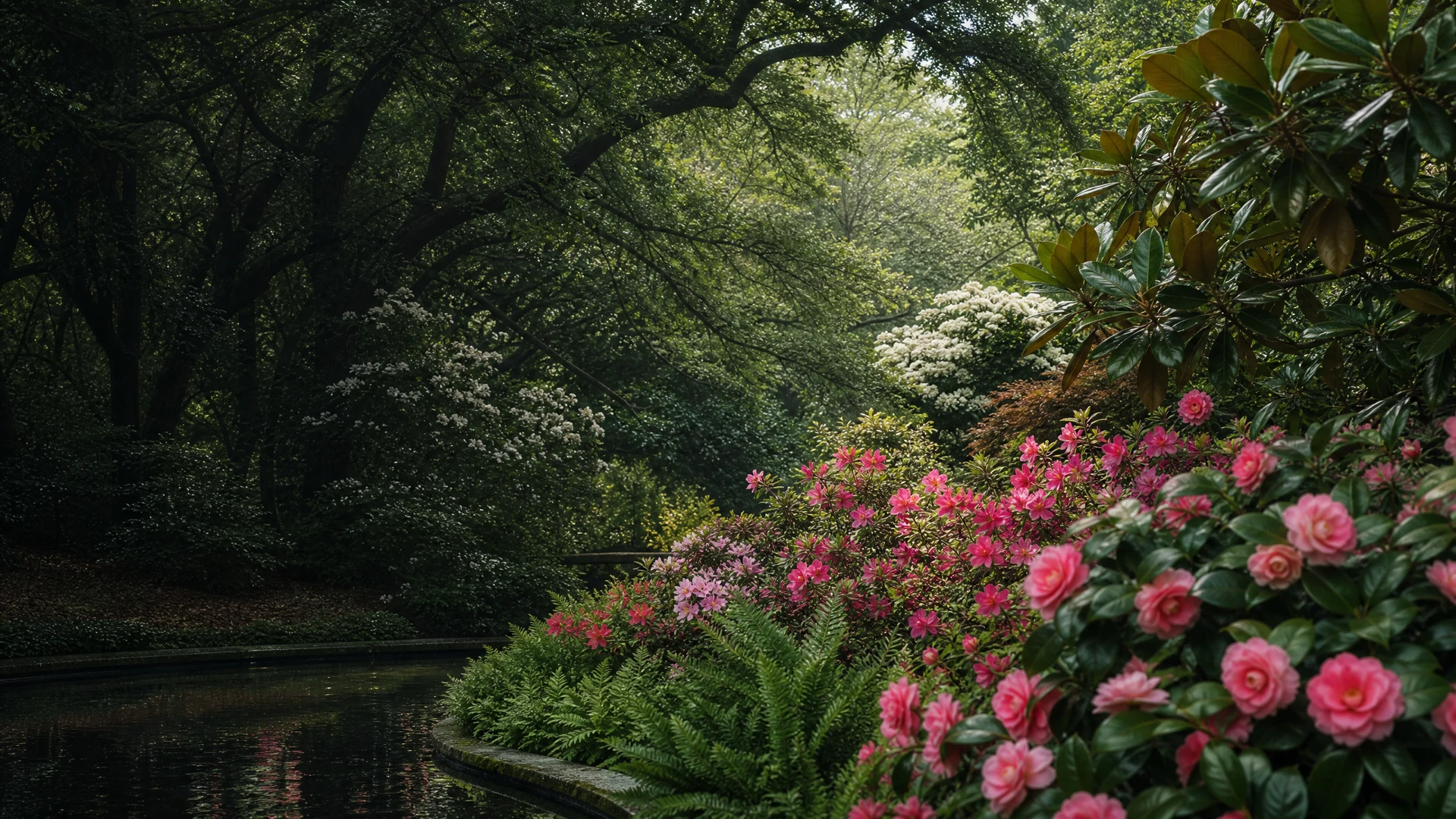
Georgia Botanical Gardens: A Verdant Journey Through the Peach State
BotanicalGardens.blog Editorial Team
Editorial research & source verification
Deep South seasonal guide
Georgia Month-by-Month Bloom Calendar
Warm conditions bring an early spring and a long growing season, with camellias and magnolias followed by azaleas, roses, and tropical color.
Garden color at a glance
Typical regional timingJan
Camellias, daffodils, magnolias, and early flowering trees.
Feb
Camellias, daffodils, magnolias, and early flowering trees.
Mar
Peak spring: azaleas, dogwoods, roses, irises, and native wildflowers.
Apr
Peak spring: azaleas, dogwoods, roses, irises, and native wildflowers.
May
Peak spring: azaleas, dogwoods, roses, irises, and native wildflowers.
Jun
Summer color: hydrangeas, crape myrtles, daylilies, and tropical beds.
Jul
Summer color: hydrangeas, crape myrtles, daylilies, and tropical beds.
Aug
Summer color: hydrangeas, crape myrtles, daylilies, and tropical beds.
Sep
Summer color: hydrangeas, crape myrtles, daylilies, and tropical beds.
Oct
Late roses, salvias, camellias, ornamental grasses, and fall color.
Nov
Late roses, salvias, camellias, ornamental grasses, and fall color.
Dec
Camellias and cool-season annuals return as winter begins.
Bloom schedules shift with elevation, microclimate, rainfall, and the previous winter. Use this as a regional planning guide, then check each garden's official bloom tracker or event calendar before making a special trip.
In This Guide
Georgia's Garden Legacy
Georgia, often known as the 'Peach State,' is a land of remarkable botanical diversity, shaped by its varied topography and climate. From the Appalachian foothills in the north to the coastal plains and barrier islands in the south, the state encompasses a rich tapestry of ecosystems. This natural bounty has fostered a deep appreciation for horticulture, leading to the establishment of world-class botanical gardens that serve as vital centers for conservation, research, and public enjoyment. These gardens not only preserve Georgia's native flora but also showcase exotic species, offering visitors a comprehensive journey through the plant kingdom.
The state's botanical significance is rooted in its unique position at the crossroads of different ecological zones. This allows for a wide range of plant communities, from the temperate forests of the mountains to the subtropical vegetation of the coast. Georgia's garden culture thrives on this natural heritage, with institutions dedicated to educating the public about sustainable practices, the importance of biodiversity, and the sheer beauty of the plant world. Each garden tells a story, reflecting the regional characteristics and historical influences that have shaped Georgia's landscape.
Visitors to Georgia's botanical gardens can expect an immersive experience, whether they are seeking tranquil contemplation, educational insights, or simply a vibrant display of nature's artistry. These living museums are dynamic spaces, constantly evolving with the seasons and contributing significantly to global plant conservation efforts. They stand as testaments to Georgia's commitment to preserving its natural heritage and fostering a deeper connection between people and plants.
Climate & Plant Diversity
Georgia's climate is predominantly humid subtropical, characterized by hot, humid summers and mild winters. However, its diverse geography creates distinct microclimates across the state. The northern mountainous regions experience cooler temperatures and occasional snowfall, falling into USDA Plant Hardiness Zones 6a-7a. As one moves south towards the Piedmont and Coastal Plain, temperatures rise, and the climate becomes more subtropical, encompassing zones 7b-9a. This broad range of hardiness zones allows for an incredible variety of plant life to thrive, from temperate deciduous trees to subtropical palms and wetland species.
This climatic variation is a boon for botanical diversity, supporting a rich tapestry of native flora. The state's ecosystems include oak-hickory forests, pine barrens, cypress swamps, and coastal marshes, each with its unique plant communities. Botanical gardens in Georgia leverage these natural conditions to cultivate extensive collections, often focusing on plants well-suited to specific regional climates while also maintaining conservatories for more sensitive tropical and desert species. Understanding these climate zones is crucial for gardeners and conservationists alike, enabling them to select appropriate plants and support local biodiversity.
| Region | USDA Zone | Climate Characteristics | Notable Native Plants |
|---|---|---|---|
| North Georgia Mountains | 6a-7a | Cooler summers, colder winters, higher elevations | Flame Azalea, Mountain Laurel, Trillium, Eastern Hemlock |
| Piedmont (Central Georgia) | 7a-8a | Hot, humid summers, mild winters, rolling hills | Dogwood, Redbud, Oak, Hickory, Sweetgum |
| Coastal Plain (South Georgia) | 8a-9a | Long, hot, humid summers, very mild winters, flat terrain | Longleaf Pine, Saw Palmetto, Cypress, Live Oak, Southern Magnolia |
| Coastal & Barrier Islands | 8b-9a | Subtropical, influenced by ocean, sandy soils | Sea Oats, Yaupon Holly, Cabbage Palm, Marsh Grasses |
Nestled in the heart of Midtown Atlanta, the Atlanta Botanical Garden is a vibrant 30-acre urban oasis dedicated to plant conservation, education, and display. It offers a stunning array of themed gardens, from the tranquil Japanese Garden to the vibrant Fuqua Orchid Center, showcasing plant diversity from around the globe. The garden is a leader in conservation efforts, particularly for orchids and carnivorous plants, and provides a vital green space for both residents and visitors to connect with nature.
Historical Note: Incorporated in 1976, the garden has undergone significant expansions, including the Green Expansion Plan completed in 2010, which doubled its size and added the iconic Kendeda Canopy Walk. It has also hosted numerous acclaimed exhibitions, including multiple 'Chihuly in the Garden' glass art installations. [Atlanta Botanical Garden]
Operated by the University of Georgia, the State Botanical Garden of Georgia spans 323 acres along the Middle Oconee River in Athens. It serves as a living laboratory for research, conservation, and education, while also providing a beautiful and tranquil setting for public enjoyment. The garden's diverse collections highlight both native Georgian flora and plants from around the world, emphasizing ecological understanding and horticultural excellence.
Historical Note: First proposed in 1967 and established in 1970, the garden received significant support from figures like then-Governor Jimmy Carter and Rosalynn Carter. It was officially designated 'The State Botanical Garden of Georgia' in 1984, leading to increased state funding and further development of its facilities and collections. [State Botanical Garden of Georgia]
Located near Savannah, the Coastal Georgia Botanical Gardens boasts a rich history dating back to the late 1880s as a USDA plant introduction station. Spanning 51 acres, it is renowned for its exceptional collections, including one of the largest bamboo collections in the eastern United States and an impressive array of camellias and palms. The gardens offer a unique blend of historical significance, horticultural diversity, and natural beauty, making it a key site for botanical research and public engagement in coastal Georgia.
Historical Note: The garden's origins trace back to the late 1880s with the planting of Japanese timber bamboo. It became a federally funded plant-introduction station in the early 20th century, playing a crucial role in introducing new plant species to the U.S. In 1983, the site was deeded to the University of Georgia, transforming into the botanical gardens known today. [Coastal Georgia Botanical Gardens]
Other Notable Gardens in Georgia
Gibbs Gardens
Ball Ground, Georgia
Located in the North Georgia mountains, Gibbs Gardens is a sprawling 220-acre estate featuring 24 themed gardens, including the largest daffodil garden in the U.S. and significant Japanese and water gardens. Founded by Jim Gibbs, it is a testament to meticulous design and horticultural passion, offering breathtaking seasonal displays. It's a privately owned garden that has become a major horticultural destination.
More Info: Gibbs Gardens Official Site
Callaway Resort & Gardens
Pine Mountain, Georgia
Callaway Resort & Gardens is a 2,500-acre garden and resort complex known for its stunning azalea trail, butterfly center, and diverse plant collections. It offers a blend of natural beauty, recreational activities, and educational programs, making it a popular destination for families and nature enthusiasts. The gardens are particularly famous for their spring azalea displays.
More Info: Callaway Gardens Official Site
Quick Comparison Table
| Name | Location | Founded | Acreage | Admission | Best For |
|---|---|---|---|---|---|
| Atlanta Botanical Garden | Atlanta | 1976 | 30 acres | Fee | Urban Exploration |
| State Botanical Garden of Georgia | Athens | 1970 | 323 acres | Free | Academic Interest |
| Coastal Georgia Botanical Gardens | Savannah | Late 1880s | 51 acres | Fee | Specialized Collections |
| Gibbs Gardens | Ball Ground | 2012 (opened) | 220 acres | Fee | Seasonal Displays |
| Callaway Resort & Gardens | Pine Mountain | 1952 | 2,500 acres | Fee | Family & Recreation |
Visitor Planning Tips
- Check Seasonal Blooms: Georgia's gardens are dynamic. Before your visit, check the garden's website for their 'what's in bloom' section to ensure you catch your favorite flowers or seasonal displays, especially for azaleas in spring or camellias in winter.
- Hydrate and Protect from Sun: Especially during the hot and humid summer months (June-August), it's crucial to stay hydrated. Bring water, wear a hat, and apply sunscreen. Many gardens offer shaded areas, but you'll likely be outdoors for extended periods.
- Explore Regional Diversity: Given Georgia's varied climate zones, consider visiting gardens in different regions (e.g., Atlanta, Athens, Savannah) to experience the full spectrum of the state's botanical offerings, from mountain flora to coastal species.
- Plan for Events: Many gardens host special events, festivals, and exhibitions throughout the year, such as holiday light shows or art installations. These can enhance your visit but may also mean larger crowds or specific ticket requirements. Check the event calendar in advance.
- Wear Comfortable Footwear: You'll be doing a lot of walking! Comfortable shoes are essential to fully enjoy the extensive grounds and diverse trails found in Georgia's botanical gardens.
Frequently Asked Questions
References
BotanicalGardens.blog Editorial Team
Editorial research & source verification
About the editorial team
BotanicalGardens.blog publishes as an editorial team. We do not claim individual credentials or first-hand visits unless a page identifies and substantiates them. Our process prioritizes official garden records, public institutions, and clearly named sources.
Editorial verification
This guide is researched from official garden pages, public institutions, and other named sources where available. Visitor details can change; confirm hours, ticketing, and accessibility directly with the garden before a special trip.
Read our editorial standards or report a correction at corrections@botanicalgardens.blog.