Michigan · Est. 1907
Matthaei Botanical Gardens
Discover a world of botanical wonder and ecological resilience at the University of Michigan's Matthaei Botanical Gardens.
Founded
1907
Size
300 acres
Hardiness Zone
USDA Zone 6a
Best Season
May through October for outdoor gardens; year-round for the Conservatory.
About Matthaei Botanical Gardens
The University of Michigan Matthaei Botanical Gardens, established in 1907, spans 300 acres and serves as a vibrant center for plant conservation, research, and education. It features diverse outdoor gardens, extensive natural areas with trails, and a multi-climate conservatory. As part of the Matthaei Botanical Gardens and Nichols Arboretum organization, it actively promotes social and ecological resilience through its stewardship and programs.
History & Heritage
Founded in 1907 by the University of Michigan, the gardens expanded significantly with a 200-acre donation from former Michigan regent Frederick C. Matthaei Sr. and his wife Mildred. A pivotal development was the completion of the 10,000+ square-foot conservatory in 1964, designed by architect Alden Dow, which remains a prominent feature. The gardens have continuously evolved, incorporating restored prairies and diverse collections for public engagement and scientific study.
Signature Feature
The Conservatory
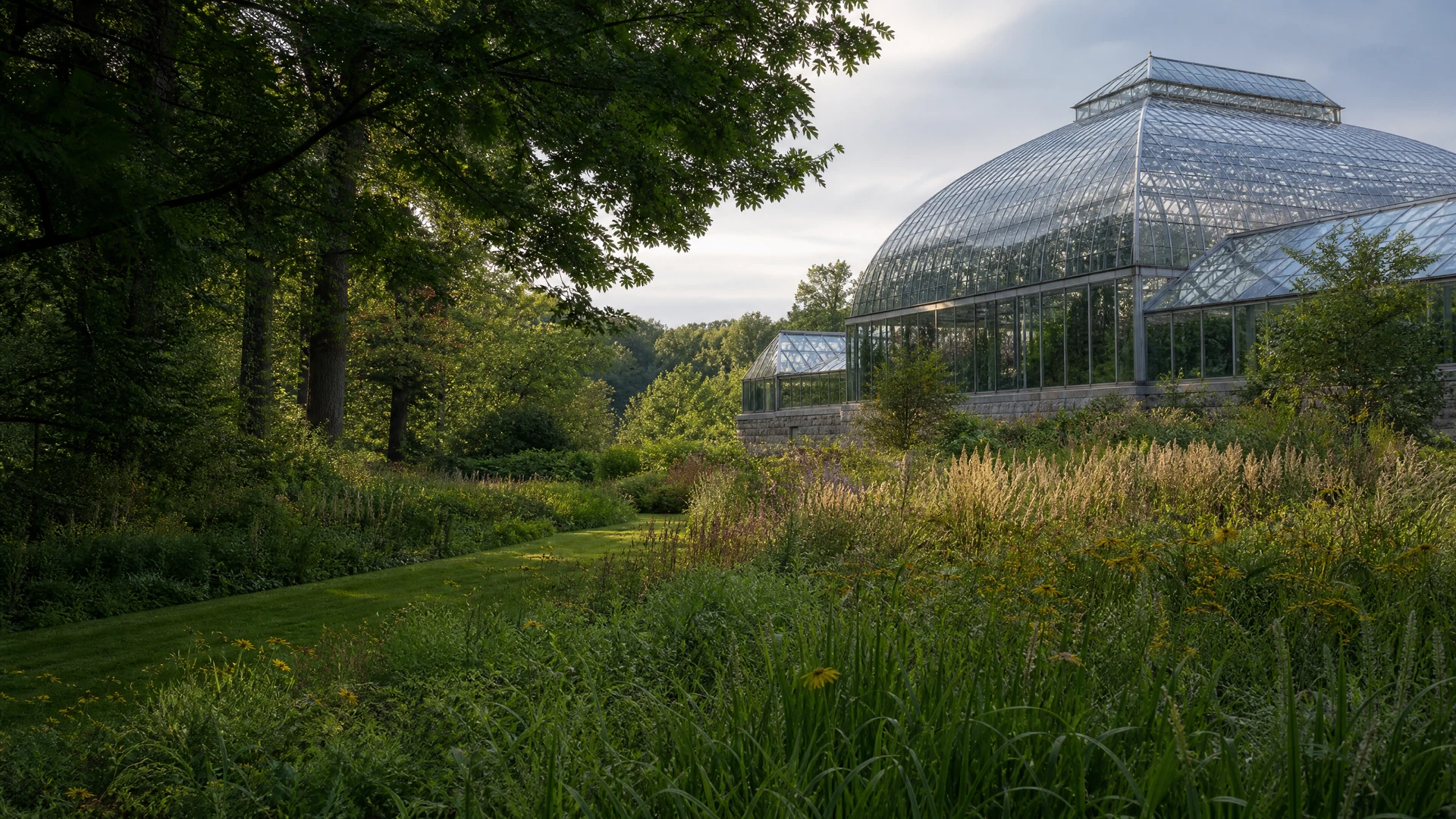
The 10,000+ square-foot conservatory, designed by Alden Dow and completed in 1964, is believed to be the largest university-operated display greenhouse in the United States. It houses three distinct climate zones: a Tropical House with plants from near the equator, a Temperate House showcasing Mediterranean and warm-temperate Asian flora, and an Arid House featuring desert cacti and succulents.
Bloom-planning note
Best Time to See Blooms at Matthaei Botanical Gardens
The strongest overall display is typically May through October for outdoor gardens; year-round for the Conservatory.. That window combines the garden's major collections with the regional sequence of flowering trees, bulbs, perennials, and seasonal color.
In the broader Great Lakes & Midwest season, the spring sequence begins with bulbs and flowering trees, builds into a broad summer perennial season, and ends with rich foliage and grasses.
Timing changes with weather, elevation, and individual collection conditions. Confirm bloom progress directly with the garden before planning a special visit.
Photo Gallery

Lush greenery within the conservatory
Vibrant floral displays in an outdoor garden
A tranquil pathway through the natural areas
Notable Collections
Gaffield Children's Garden
An interactive space designed for young visitors, featuring various play areas and educational stations that encourage engagement with nature.
Demonstration Prairie
A restored prairie ecosystem, with restoration efforts beginning in 1967, showcasing native grasses and wildflowers on previously agricultural land.
Tropical House
One of three climate zones within the conservatory, displaying a rich collection of plants from equatorial regions, including bromeliads, orchids, and cacao.
Bog Garden (Mud Lake Bog)
A unique natural area featuring specialized plant communities adapted to wetland conditions, offering insights into Michigan's diverse ecosystems.
Plan Before You Go
Hours, Parking & Accessibility
Hours & Seasonal Timing
Tuesday-Sunday: 10am–4:30pm; Wednesday: 10am–8:30pm; Closed Mondays.
Best seasonal window: May through October for outdoor gardens; year-round for the Conservatory.
Parking & Arrival
Metered parking available at $2.50 per hour, with a $6 daily maximum. Kiosks accept coins and credit cards. Members park for free.
Check the official visit page for event-day parking changes and arrival instructions.
Accessibility
Accessible parking is available near all entrances. Wheelchair-accessible pathways are present throughout the gardens and arboretum. Accessible restrooms are also available.
Contact the garden before visiting to discuss route conditions, mobility equipment, or support needs.
Visitor details are reviewed from the garden's public information and were last checked May 2026. Policies, prices, and route conditions can change; confirm final arrangements directly with the garden.
Recognition & Awards
- Recognized for its significant contributions to plant conservation and ecological research.
- Home to one of the largest university-operated display greenhouses in the U.S.
Editorial Standards
This profile was prepared by the BotanicalGardens.blog editorial research desk using official garden pages and other named sources where available. Hours, admission, and access details can change; confirm them with the garden before a special trip. This profile was last reviewed May 2026. If you notice an inaccuracy, please contact us.
Plan Your Visit
May through October for outdoor gardens; year-round for the Conservatory.
Address
1800 N. Dixboro Rd. Ann Arbor, MI 48105
Phone
(734) 647-7600
Hours
Tuesday-Sunday: 10am–4:30pm; Wednesday: 10am–8:30pm; Closed Mondays.
Admission
Free
Parking
Metered parking available at $2.50 per hour, with a $6 daily maximum. Kiosks accept coins and credit cards. Members park for free.
Accessibility
Accessible parking is available near all entrances. Wheelchair-accessible pathways are present throughout the gardens and arboretum. Accessible restrooms are also available.
Insider Tips
- 1Allow at least 2-3 hours to explore both the indoor conservatory and several outdoor gardens.
- 2Visit on a Wednesday evening to enjoy extended hours until 8:30pm.
- 3Check the website for special events and seasonal blooms, especially the W.E. Upjohn Peony Garden in late spring.
- 4Consider becoming a member for free parking and to support the gardens' mission.
Nearby Attractions
- Nichols Arboretum (adjacent, free admission)
- University of Michigan Museum of Natural History (approx. 4 miles)
- Downtown Ann Arbor (approx. 5 miles)