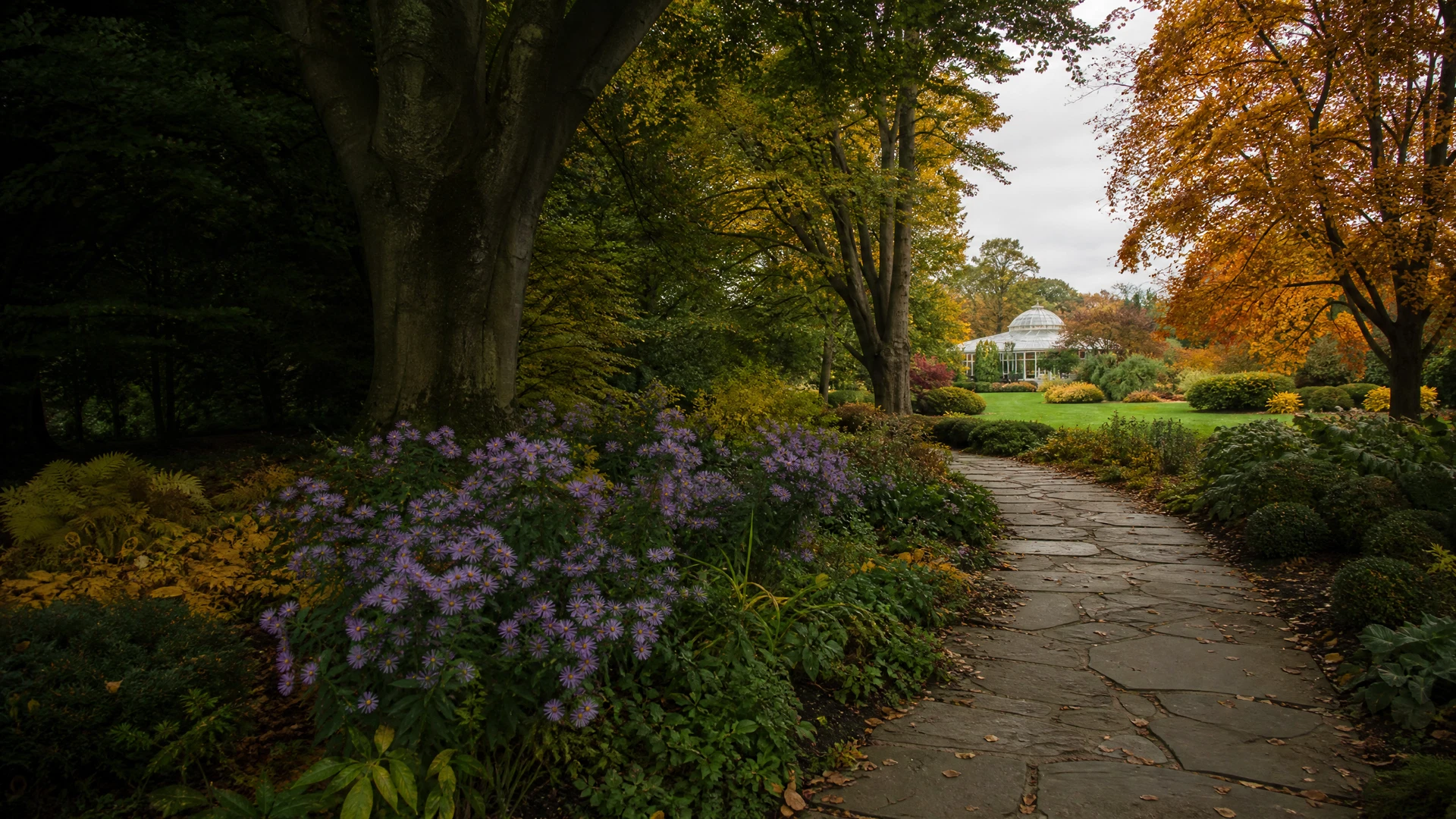
New York Botanical Gardens Guide
From a 50-acre old-growth forest in the Bronx to the most-visited cherry blossom collection in the Western Hemisphere — New York's botanical gardens are as ambitious as the city itself.
BotanicalGardens.blog Editorial Team
Editorial research & source verification
Northeast & New England seasonal guide
New York Month-by-Month Bloom Calendar
Expect a defined but vivid warm-season arc: bulbs and flowering trees in spring, perennial abundance in summer, then notable foliage in autumn.
Garden color at a glance
Typical regional timingJan
Winter structure, indoor conservatory color, and very early witch hazel.
Feb
Winter structure, indoor conservatory color, and very early witch hazel.
Mar
Winter structure, indoor conservatory color, and very early witch hazel.
Apr
Daffodils, magnolias, cherries, ephemerals, and early azaleas.
May
Daffodils, magnolias, cherries, ephemerals, and early azaleas.
Jun
Peak garden season: roses, peonies, irises, lilacs, and water gardens.
Jul
Peak garden season: roses, peonies, irises, lilacs, and water gardens.
Aug
Late-summer borders: hydrangeas, lilies, natives, and pollinator plants.
Sep
Late-summer borders: hydrangeas, lilies, natives, and pollinator plants.
Oct
Maples, grasses, asters, berries, and fall foliage at its strongest.
Nov
Maples, grasses, asters, berries, and fall foliage at its strongest.
Dec
Evergreen structure and holiday greenhouse displays.
Bloom schedules shift with elevation, microclimate, rainfall, and the previous winter. Use this as a regional planning guide, then check each garden's official bloom tracker or event calendar before making a special trip.
In This Guide
New York's Garden Legacy
New York has no shortage of superlatives in the botanical world. The New York Botanical Garden in the Bronx holds 250 acres, one million living plants, and a Haupt Conservatory that is one of the largest Victorian glasshouses in the world. The Brooklyn Botanic Garden, 52 acres in the middle of one of the most densely populated neighborhoods on Earth, has been doing extraordinary things in a small space since 1910 — including maintaining the most-visited Japanese cherry blossom collection in the Western Hemisphere. Together, these two institutions attract more than two million visitors per year and conduct plant research that reaches every continent.
New York's native flora is a product of its geography: the Adirondacks in the north, the Hudson Valley in the middle, the coastal plain of Long Island in the south, and the urban heat island of New York City creating its own microclimate. Sugar maple, eastern white pine, and American beech dominate the upstate forests. Trilliums, bloodroot, and trout lilies carpet the forest floors in spring. The state's botanical gardens have built their collections around this native diversity while adding world-class tropical and subtropical collections in their conservatories — a sensible hedge against the fact that New York winters are, to put it diplomatically, not ideal for outdoor gardening.
The garden culture of New York City is inseparable from the broader story of the American urban parks movement. Frederick Law Olmsted designed Central Park in 1858 as a democratic green space for all New Yorkers — a radical idea at the time. The NYBG, founded in 1891 by Nathaniel Lord Britton and his wife Elizabeth after a visit to Kew Gardens in London, was conceived on the same democratic principle: world-class botanical science, accessible to the public. That tradition continues today, with both the NYBG and Brooklyn Botanic Garden offering free admission on select days and running community programs in all five boroughs.
Climate & Plant Diversity
New York's climate is the kind that builds character — and, incidentally, makes for excellent botanical gardens. Cold winters force the state's gardens to invest in world-class conservatories (the NYBG's Haupt Conservatory is 90,000 square feet of glass), while the warm, humid summers produce spectacular outdoor displays from May through October. USDA hardiness zones range from 3b in the Adirondacks to 7b along the Long Island coast, a spread that allows the state's gardens to grow everything from cold-hardy conifers to magnolias and camellias.
New York City's urban heat island effect pushes the city's effective hardiness zone a full step warmer than the surrounding region — Zone 7b versus Zone 6 just 30 miles north — which is why Brooklyn Botanic Garden can grow magnolias and Japanese maples that would struggle in Westchester. The NYBG's 50-acre Thain Family Forest is the largest remaining tract of the original New York City forest, with trees that predate European settlement. It is, in the middle of the Bronx, genuinely old growth.
| Region | USDA Zone | Climate Characteristics | Notable Plant Types |
|---|---|---|---|
| New York City & Long Island | 7a - 7b | Milder winters, warm and humid summers, coastal influence | Magnolias, Cherry Trees, Coastal Grasses |
| Hudson Valley | 5b - 6b | Cold winters, warm summers, moderate precipitation | Oaks, Maples, Apple Trees, Perennials |
| Upstate & Adirondacks | 3b - 5a | Harsh, snowy winters, cooler summers | Conifers, Birches, Alpine Plants |
| Western New York | 5b - 6a | Lake-effect snow in winter, warm summers | Lilacs, Hydrangeas, Deciduous Trees |
Featured Botanical Gardens
The New York Botanical Garden is, by almost any measure, the most ambitious botanical institution in the United States. Founded in 1891 on 250 acres of Bronx Park, it holds one million living plants, a research library of 11 million items, and the Enid A. Haupt Conservatory — a 90,000-square-foot Victorian glasshouse that is a National Historic Landmark in its own right. The Thain Family Forest, 50 acres of old-growth woodland in the middle of the Bronx, contains trees that predate the city itself. The garden's plant science program has documented over 3,000 new species in the last decade alone.
Historical Note: NYBG was established in 1891 and the first structures on the grounds opened at the end of that decade. Since 1967, the garden has been listed as a National Historic Landmark. [Wikipedia: New York Botanical Garden]
Brooklyn Botanic Garden is the art of doing a great deal in a small space. Fifty-two acres in central Brooklyn, designed by the Olmsted Brothers in 1910, and it manages to fit a Japanese Hill-and-Pond Garden, a Shakespeare Garden, a Cranford Rose Garden with 5,000 rose plants, and the Cherry Esplanade — which draws 100,000 visitors during the two-week Sakura Matsuri cherry blossom festival every spring. The Steinhardt Conservatory holds three climate-specific galleries. Over 800,000 people visit annually, making it one of the most-visited cultural institutions in New York City.
Historical Note: The site of Brooklyn Botanic Garden was first designated in 1897, and it opened in May 1911 on the site of an ash dump. Most of BBG's expansions were carried out over the next three decades under its first director, C. Stuart Gager. [Wikipedia: Brooklyn Botanic Garden]
Queens Botanical Garden is the sustainability pioneer of New York City's botanical institutions. Its LEED Platinum-certified Visitor & Administration Building, opened in 2007, was one of the first public garden buildings in the country to achieve that certification, and it runs entirely on renewable energy. The garden was originally created for the 1939 World's Fair — which means it has been greening one of the most densely populated urban areas in the world for over 85 years. The Rose Garden, Bee Garden, and Herb Garden are compact but expertly maintained, and the Wedding Garden is one of the most popular outdoor ceremony venues in Queens.
Historical Note: Queens Botanical Garden was created as part of the 1939 New York World's Fair in Flushing Meadows–Corona Park. It moved to its current location in 1963 in preparation for the 1964 New York World's Fair. [Wikipedia: Queens Botanical Garden]
Buffalo and Erie County Botanical Gardens
Buffalo, NY • Est. 1900 • 11.5 acres
Located within South Park, this garden features a historic tri-domed glass conservatory designed by Lord & Burnham. It showcases tropical plant species and is a prominent landmark in Western New York.
Read more on WikipediaCornell Botanic Gardens
Ithaca, NY • Est. 1935 • 4,300 acres
Encompassing a vast area around Cornell University, these gardens include an arboretum, specialized plant collections, and extensive natural areas, serving as a living laboratory for students and the public.
Read more on WikipediaQuick Comparison Table
| Name | Location | Founded | Acreage | Admission | Best For |
|---|---|---|---|---|---|
| New York Botanical Garden | The Bronx, New York City | 1891 | 250 acres | Paid Admission | Comprehensive Collections & Historic Conservatory |
| Brooklyn Botanic Garden | Brooklyn, New York City | 1911 | 52 acres | Paid Admission | Cherry Blossoms & Japanese Garden |
| Queens Botanical Garden | Flushing, Queens, New York City | 1939 | 39 acres | Paid Admission (Free hours available) | Sustainable Practices & Community Focus |
| Buffalo Botanical Gardens | Buffalo | 1900 | 11.5 acres | Paid Admission | Historic Conservatory |
| Cornell Botanic Gardens | Ithaca | 1935 | 4,300 acres | Free | Extensive Natural Areas |
Visitor Planning Tips
Utilize Public Transit: New York City's botanical gardens are highly accessible via subway, bus, and commuter rail. Driving can be stressful and parking is often limited or expensive, so public transportation is highly recommended.
Time Your Visit for Blooms: If you want to see specific blooms like the cherry blossoms at Brooklyn Botanic Garden or the roses at the New York Botanical Garden, check their online bloom trackers before planning your trip.
Check for Free Hours: Many gardens offer free admission periods, such as winter weekdays or specific hours during the summer. Planning your visit around these times can save money.
Dress for the Weather: New York weather can be unpredictable. Wear comfortable walking shoes and dress in layers, especially if you plan to transition between outdoor gardens and warm, humid conservatories.
Frequently Asked Questions
References
- New York Botanical Garden - Wikipedia
- Brooklyn Botanic Garden - Wikipedia
- Queens Botanical Garden - Wikipedia
- Buffalo and Erie County Botanical Gardens - Wikipedia
- Cornell Botanic Gardens - Wikipedia
Content compiled by the BotanicalGardens.blog Editorial Team.
BotanicalGardens.blog Editorial Team
Editorial research & source verification
About the editorial team
BotanicalGardens.blog publishes as an editorial team. We do not claim individual credentials or first-hand visits unless a page identifies and substantiates them. Our process prioritizes official garden records, public institutions, and clearly named sources.
Editorial verification
This guide is researched from official garden pages, public institutions, and other named sources where available. Visitor details can change; confirm hours, ticketing, and accessibility directly with the garden before a special trip.
Read our editorial standards or report a correction at corrections@botanicalgardens.blog.