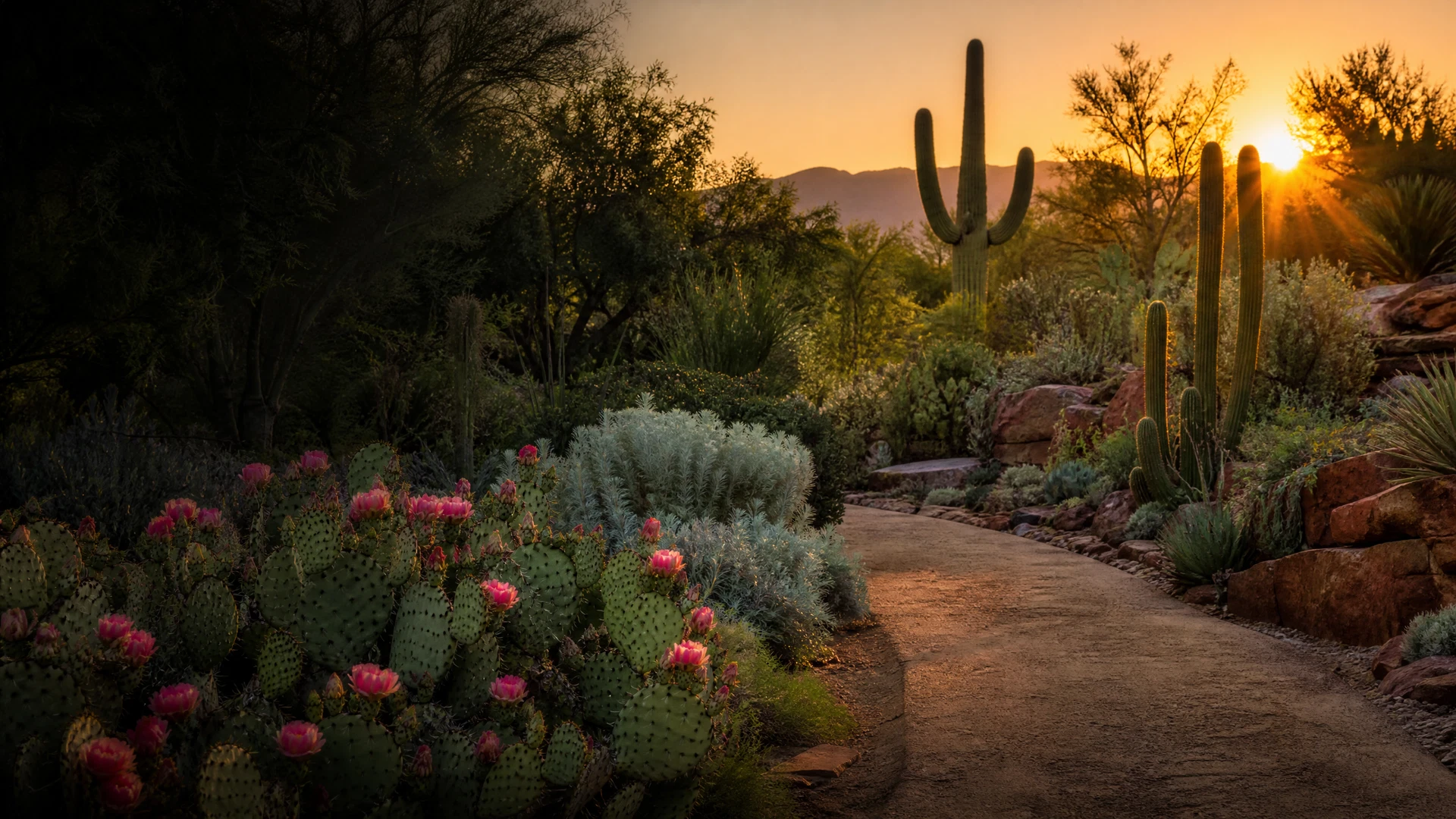
Arizona Botanical Gardens: A Desert Bloom Guide
BotanicalGardens.blog Editorial Team
Editorial research & source verification
Desert Southwest seasonal guide
Arizona Month-by-Month Bloom Calendar
The most comfortable and color-rich period is often late winter through spring; summer rewards early visitors with cacti and monsoon-season blooms.
Garden color at a glance
Typical regional timingJan
Winter bloom season: aloes, acacias, desert shrubs, and early wildflowers.
Feb
Winter bloom season: aloes, acacias, desert shrubs, and early wildflowers.
Mar
Peak desert color: wildflowers, cacti, agaves, palo verde, and flowering trees.
Apr
Peak desert color: wildflowers, cacti, agaves, palo verde, and flowering trees.
May
Peak desert color: wildflowers, cacti, agaves, palo verde, and flowering trees.
Jun
Heat-season display: cacti, succulents, yuccas, and early-morning blooms.
Jul
Heat-season display: cacti, succulents, yuccas, and early-morning blooms.
Aug
Heat-season display: cacti, succulents, yuccas, and early-morning blooms.
Sep
Monsoon and fall color: rain-triggered annuals, salvias, and desert daisies.
Oct
Monsoon and fall color: rain-triggered annuals, salvias, and desert daisies.
Nov
Cool-season foliage, seed forms, and early winter flowers begin returning.
Dec
Cool-season foliage, seed forms, and early winter flowers begin returning.
Bloom schedules shift with elevation, microclimate, rainfall, and the previous winter. Use this as a regional planning guide, then check each garden's official bloom tracker or event calendar before making a special trip.
In This Guide
Arizona's Garden Legacy
Arizona, often envisioned as a land of vast deserts and towering cacti, holds a surprisingly rich and diverse botanical heritage. Its unique geographical position and varied elevations create microclimates that support an incredible array of plant life, from the iconic saguaros of the Sonoran Desert to the ponderosa pines of its northern mountains. The state's botanical gardens serve as vital sanctuaries, preserving native species, conducting crucial research, and educating the public about the delicate balance of desert ecosystems. These institutions are not just collections of plants; they are vibrant centers of conservation, culture, and community engagement, reflecting Arizona's deep connection to its natural environment.
The garden culture in Arizona is distinct, heavily influenced by the need for water conservation and the appreciation of drought-tolerant landscapes. This has fostered innovative approaches to horticulture, emphasizing xeriscaping and the use of native and adapted plants that thrive in arid conditions. Beyond their aesthetic appeal, Arizona's botanical gardens play a critical role in promoting sustainable living and showcasing the resilience and beauty of desert flora. They offer a refreshing perspective on what a garden can be, challenging traditional notions with their unique displays of succulents, cacti, and other desert marvels.
Visitors to Arizona's botanical gardens will discover a world far beyond the stereotypical desert landscape. These living laboratories provide immersive experiences, allowing guests to explore diverse plant collections, learn about ethnobotany, and witness the vibrant ecosystems that flourish in seemingly harsh conditions. From sprawling arboretums to intimate urban oases, each garden tells a story of adaptation, survival, and the enduring allure of the desert's botanical treasures, making them indispensable resources for both scientific study and public enjoyment.
Climate & Plant Diversity
Arizona's climate is characterized by significant regional variations, primarily influenced by elevation. The southern and western parts of the state experience a hot desert climate, dominated by the Sonoran Desert, which is known for its bimodal rainfall pattern and extreme summer temperatures. This environment supports a unique biome rich in cacti, succulents, and drought-deciduous trees. Moving northward and eastward, elevations rise, leading to semi-arid steppes and eventually to temperate forests in the mountainous regions. This dramatic shift in climate zones within a relatively small geographical area contributes to Arizona's exceptional plant diversity, making it a fascinating subject for botanical study and conservation efforts.
The state's botanical gardens strategically leverage these climatic differences to cultivate a wide range of plant collections. Gardens in the desert lowlands focus on species adapted to extreme heat and aridity, often featuring extensive collections of cacti, agaves, and other desert flora. In contrast, arboretums at higher elevations might showcase plants from cooler, more temperate zones, including conifers and deciduous trees. Understanding these climatic nuances is key to appreciating the horticultural strategies employed by Arizona's botanical institutions, which are at the forefront of researching and promoting plants resilient to climate change and water scarcity.
| Region | Climate Zone | Typical Climate | Notable Plants |
|---|---|---|---|
| Sonoran Desert (Phoenix, Tucson) | USDA Zones 9-10 | Hot summers, mild winters, bimodal rainfall | Saguaro cactus, Palo Verde, Ocotillo, Agave, Prickly Pear |
| Central Highlands (Prescott, Payson) | USDA Zones 7-8 | Mild summers, cold winters, four distinct seasons | Ponderosa Pine, Juniper, Oak, Manzanita, Yucca |
| Colorado Plateau (Flagstaff, Grand Canyon) | USDA Zones 5-7 | Cool summers, very cold snowy winters | Aspen, Fir, Spruce, Ponderosa Pine, Wildflowers |
| Transition Zone (Superior, Globe) | USDA Zones 8-9 | Intermediate climate between desert and highlands | Agave, Ocotillo, Juniper, various Cacti, Chaparral species |
Featured Botanical Gardens in Arizona
The Desert Botanical Garden, nestled in Phoenix's Papago Park, is a living museum dedicated to the conservation and study of desert plants. Established in 1939, it showcases the beauty and diversity of arid flora from the Sonoran Desert and other deserts worldwide. Visitors can explore five thematic trails, each offering a unique perspective on desert ecosystems and their inhabitants. The garden is also a hub for research, education, and art, hosting numerous events and exhibitions throughout the year.
Historical Note: Founded by the Arizona Cactus and Native Flora Society, the garden was established to preserve and display the unique plant life of the Sonoran Desert. Early efforts by individuals like Gustaf Starck and Gertrude Webster were instrumental in its creation and development. [Desert Botanical Garden Wikipedia]
The Tucson Botanical Gardens offers a lush urban oasis in the heart of Tucson, featuring a diverse collection of 20 themed gardens. From the arid beauty of the Cactus & Succulent Garden to the vibrant Children's Garden, TBG provides an immersive experience for all ages. The seasonal Cox Butterfly & Orchid Pavilion is a highlight, showcasing tropical butterflies from around the world. The gardens also serve as a cultural center, hosting art exhibits, educational programs, and community events.
Historical Note: Originally the private estate of Rutger and Bernice Porter, the property was donated to the City of Tucson in 1968 with the vision of creating a public botanical garden. It officially opened to the public in 1974, preserving the Porter family's legacy and their passion for horticulture. [Tucson Botanical Gardens Wikipedia]
Boyce Thompson Arboretum, Arizona's oldest and largest botanical garden, is a living laboratory dedicated to the study and display of arid land plants from around the world. Located near Superior, it encompasses 392 acres of diverse landscapes, from desert uplands to riparian zones. The arboretum is a haven for both plant enthusiasts and wildlife observers, offering extensive collections and a rich biodiversity. Its network of trails provides opportunities for exploration and education about desert ecosystems.
Historical Note: Founded by mining engineer William Boyce Thompson in 1924, the arboretum was established as a desert plant research facility and 'living museum.' Thompson's vision was to create a place for studying and showcasing plants that could thrive in arid environments. [Boyce Thompson Arboretum Wikipedia]
Other Notable Gardens
The Arboretum at Flagstaff
Flagstaff, Arizona
Focuses on high-altitude plants and native flora of the Colorado Plateau. Offers beautiful trails and educational programs.
Learn MoreTohono Chul Park
Tucson, Arizona
A unique botanical garden and cultural center showcasing the Sonoran Desert's natural and cultural heritage. Features desert gardens, art exhibits, and nature trails.
Learn MoreQuick Comparison Table
| Name | Location | Founded | Acreage | Admission | Best For |
|---|---|---|---|---|---|
| Desert Botanical Garden | Phoenix, Arizona | 1939 | 140 acres | Admission fee applies. Free on second Tuesday of each month (registration required). | Desert Plant Enthusiasts |
| Tucson Botanical Gardens | Tucson, Arizona | 1968 (public garden 1974) | 5.5 acres | Admission fee applies. Members and children under 4 are free. | Family-Friendly Exploration |
| Boyce Thompson Arboretum | Superior, Arizona | 1924 | 392 acres | Admission fee applies. Members and children under 5 are free. | Arid Plant Research & Birdwatching |
Visitor Planning Tips
- Hydrate and Protect: The Arizona sun can be intense. Always carry plenty of water, wear a wide-brimmed hat, sunglasses, and apply sunscreen generously, even during cooler months.
- Visit Early: Especially from late spring to early fall, plan your visit for the early morning hours. Temperatures are much milder, and you'll often experience more active wildlife and fewer crowds.
- Check for Events: Arizona's botanical gardens frequently host special events, workshops, and seasonal exhibits. Check their official websites before your visit to see if there's anything unique happening that aligns with your interests.
- Wear Appropriate Footwear: You'll be doing a lot of walking, often on unpaved trails. Comfortable, closed-toe walking shoes are essential for a pleasant experience.
- Respect the Flora and Fauna: Stay on marked paths, do not touch or disturb plants or wildlife, and pack out everything you pack in. These gardens are vital conservation areas.
Frequently Asked Questions
References
- Desert Botanical Garden - Wikipedia
- Tucson Botanical Gardens - Wikipedia
- Boyce Thompson Arboretum - Wikipedia
- Desert Botanical Garden Admission: Tickets, Hours & More | DBG
- Plan Your Visit - Tucson Botanical Gardens
- Plan a Visit - Boyce Thompson Arboretum
- The Arboretum at Flagstaff Official Website
- Tohono Chul Park Official Website
BotanicalGardens.blog Editorial Team
Editorial research & source verification
About the editorial team
BotanicalGardens.blog publishes as an editorial team. We do not claim individual credentials or first-hand visits unless a page identifies and substantiates them. Our process prioritizes official garden records, public institutions, and clearly named sources.
Editorial verification
This guide is researched from official garden pages, public institutions, and other named sources where available. Visitor details can change; confirm hours, ticketing, and accessibility directly with the garden before a special trip.
Read our editorial standards or report a correction at corrections@botanicalgardens.blog.