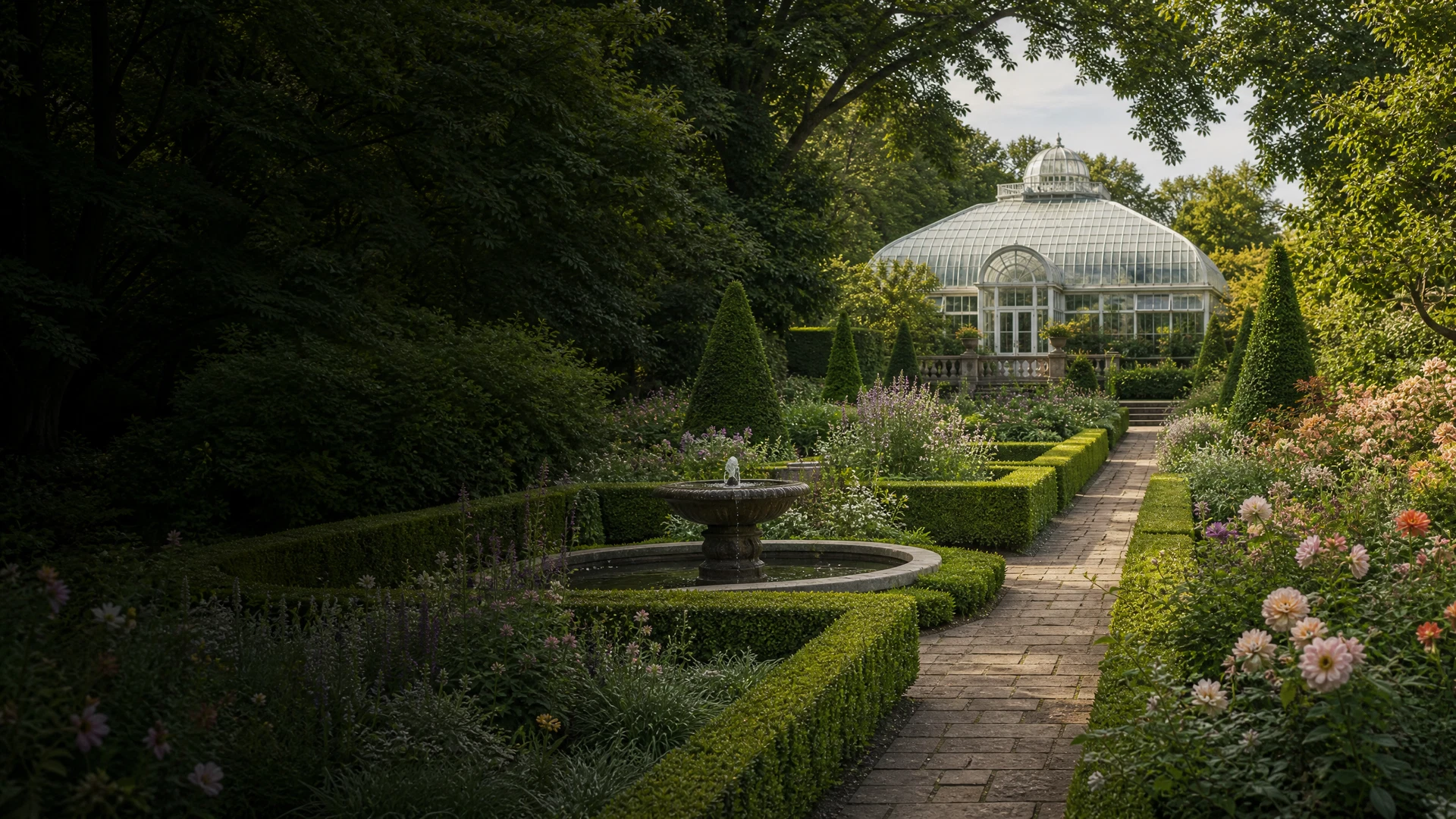
Botanical Gardens in North Carolina: The Complete Expert Guide
BotanicalGardens.blog Editorial Team
Editorial research & source verification
Mid-Atlantic & Appalachia seasonal guide
North Carolina Month-by-Month Bloom Calendar
A long shoulder season supports early flowering trees, a strong late-spring display, summer perennials, and an extended autumn foliage period.
Garden color at a glance
Typical regional timingJan
Witch hazel, hellebores, camellias, and early bulbs begin the season.
Feb
Witch hazel, hellebores, camellias, and early bulbs begin the season.
Mar
Daffodils, cherries, magnolias, dogwoods, and spring ephemerals.
Apr
Daffodils, cherries, magnolias, dogwoods, and spring ephemerals.
May
Peak spring: azaleas, rhododendrons, roses, irises, and peonies.
Jun
Peak spring: azaleas, rhododendrons, roses, irises, and peonies.
Jul
Hydrangeas, lilies, native perennials, lotuses, and pollinator plants.
Aug
Hydrangeas, lilies, native perennials, lotuses, and pollinator plants.
Sep
Hydrangeas, lilies, native perennials, lotuses, and pollinator plants.
Oct
Fall foliage, asters, camellias, grasses, and seedheads.
Nov
Fall foliage, asters, camellias, grasses, and seedheads.
Dec
Winter color from evergreens, berries, bark, and conservatory displays.
Bloom schedules shift with elevation, microclimate, rainfall, and the previous winter. Use this as a regional planning guide, then check each garden's official bloom tracker or event calendar before making a special trip.
In This Guide
North Carolina's Garden Legacy
North Carolina, often called the 'Tar Heel State,' boasts a rich and diverse botanical heritage, making it a prime destination for garden enthusiasts. Its unique geographical position, stretching from the Appalachian Mountains to the Atlantic coastline, creates a mosaic of microclimates that support an extraordinary array of native flora. This natural bounty has fostered a deep-seated garden culture, leading to the establishment of numerous botanical gardens and arboreta dedicated to preserving, studying, and showcasing the state's plant life. These institutions not only serve as vital conservation hubs but also as educational centers, inspiring a love for horticulture and environmental stewardship among residents and visitors alike.
The state's commitment to botanical excellence is evident in its world-class gardens, which range from expansive native plant sanctuaries to meticulously designed formal landscapes. These green spaces are more than just collections of plants; they are living museums that tell the story of North Carolina's ecological history and its ongoing efforts to protect biodiversity. From the vibrant spring blooms to the rich autumnal hues, the gardens offer a dynamic display of nature's artistry throughout the seasons, reflecting the state's profound connection to its natural environment.
Beyond their aesthetic appeal, North Carolina's botanical gardens play a crucial role in scientific research, horticultural innovation, and community engagement. They provide serene settings for contemplation, vibrant venues for cultural events, and hands-on learning opportunities for all ages. Whether you're a seasoned botanist, a budding gardener, or simply seeking a peaceful retreat, the botanical gardens of North Carolina offer an enriching and unforgettable experience, celebrating the verdant splendor of the Old North State.
Climate & Plant Diversity
North Carolina's climate is remarkably varied, contributing significantly to its exceptional plant diversity. The state experiences a humid subtropical climate, but this broad classification belies the distinct ecological zones found across its breadth. The western mountainous region, part of the Appalachian chain, features cooler temperatures and higher rainfall, supporting temperate forests rich in rhododendrons, azaleas, and various deciduous trees. Moving eastward, the Piedmont region enjoys moderate temperatures and fertile soils, ideal for a mix of hardwood forests and cultivated landscapes. Finally, the coastal plain and Outer Banks are characterized by warmer temperatures, sandy soils, and unique maritime forests, home to longleaf pines, cypress, and a variety of salt-tolerant species.
This climatic gradient allows for an incredible range of plant communities, from the high-altitude Appalachian flora to the coastal dune vegetation. Botanical gardens across North Carolina strategically leverage these regional differences, often specializing in plants suited to their local conditions while also cultivating diverse collections that thrive in controlled environments. This thoughtful approach ensures that visitors can encounter a vast spectrum of plant life, from rare native orchids to exotic tropical species, all within the state's varied botanical landscapes.
| Region | Climate Zone | Characteristics | Notable Plants |
|---|---|---|---|
| Mountains (Western NC) | USDA Zones 5b-6b | Cooler temperatures, high rainfall, distinct seasons | Rhododendron, Azalea, Fraser Fir, Eastern Hemlock |
| Piedmont (Central NC) | USDA Zones 7a-7b | Moderate temperatures, four distinct seasons, fertile soils | Oak, Hickory, Dogwood, Redbud, Loblolly Pine |
| Coastal Plain (Eastern NC) | USDA Zones 7b-8b | Warmer temperatures, high humidity, sandy soils | Longleaf Pine, Cypress, Venus Flytrap, Live Oak |
| Outer Banks (Coastal Barrier Islands) | USDA Zones 8a-8b | Mild winters, hot summers, salt spray, sandy dunes | Sea Oats, Yaupon Holly, Eastern Red Cedar, Wax Myrtle |
Featured Botanical Gardens
The North Carolina Botanical Garden, operated by the University of North Carolina at Chapel Hill, is a leading institution dedicated to the research, cataloging, and promotion of native plant species. It encompasses a vast 700 acres, making it one of the largest native plant botanical gardens in the Southeastern United States. The garden serves as a living laboratory and a sanctuary for biodiversity, offering visitors a deep dive into the rich flora of the region.
Historical Note: The garden's origins trace back to 1903 with Professor William Chambers Coker's initial plantings. In 1952, 70 acres were formally dedicated for botanical garden development, with significant expansion throughout the latter half of the 20th century. It has since grown into a vital center for botanical conservation and education. [North Carolina Botanical Garden Wikipedia]
Nestled within Duke University, the Sarah P. Duke Gardens offer 55 acres of meticulously landscaped and wooded areas. Renowned for its stunning design and diverse plant collections, the gardens provide a tranquil escape and a vibrant educational resource. Visitors can explore various themed sections, each offering a unique botanical experience.
Historical Note: The gardens officially began in 1934, but an initial planting was destroyed by floods. Re-established in 1936 as a memorial to Sarah P. Duke, the new gardens were designed by the pioneering landscape architect Ellen Biddle Shipman, whose Italianate Terraces remain a highlight. [Sarah P. Duke Gardens Wikipedia]
The Daniel Stowe Botanical Garden, now operating as the Daniel Stowe Conservancy, spans 380 acres in Belmont, offering a breathtaking blend of manicured gardens and natural landscapes. With 30 acres dedicated to formal gardens, a stunning conservatory, and extensive trails, it provides a rich horticultural experience focused on connecting people with nature.
Historical Note: Founded by retired textile executive Daniel J. Stowe, the land was reserved in 1991, with construction beginning in 1997 and the gardens opening to the public in 1999. The institution recently rebranded to Daniel Stowe Conservancy in 2025, reflecting its broader mission of conservation. [Daniel Stowe Conservancy Wikipedia]
Quick Comparison Table
| Name | Location | Founded | Acreage | Admission | Best For |
|---|---|---|---|---|---|
| North Carolina Botanical Garden | Chapel Hill, North Carolina | 1952 | 700 acres | Free Admission | Native Plant Enthusiasts & Researchers |
| Sarah P. Duke Gardens | Durham, North Carolina | 1936 | 55 acres | Free Admission | Landscape Design & Tranquil Walks |
| Daniel Stowe Botanical Garden | Belmont, North Carolina | 1999 | 380 acres (30 acres formal gardens) | Admission Fee | Family Exploration & Conservatory Displays |
Visitor Planning Tips
- Check Seasonal Bloom Schedules: North Carolina's diverse climate means different plants peak at different times. Consult individual garden websites for their 'what's in bloom' sections to plan your visit around your favorite flowers or seasonal displays. Spring and fall are generally the most vibrant times.
- Prepare for Varied Weather: The state's weather can be unpredictable, especially when transitioning between regions. Dress in layers, wear comfortable walking shoes, and bring sun protection and rain gear, regardless of the forecast, to ensure a comfortable visit.
- Explore Beyond the Main Paths: Many gardens offer extensive trail systems that delve into natural areas, showcasing native ecosystems. Don't hesitate to venture off the manicured paths to discover hidden gems and a deeper connection with North Carolina's wild beauty.
- Utilize Educational Programs: North Carolina botanical gardens are often rich with educational opportunities, including guided tours, workshops, and special events. Check their calendars in advance to enhance your visit with expert insights and hands-on experiences.
Frequently Asked Questions
References
BotanicalGardens.blog Editorial Team
Editorial research & source verification
About the editorial team
BotanicalGardens.blog publishes as an editorial team. We do not claim individual credentials or first-hand visits unless a page identifies and substantiates them. Our process prioritizes official garden records, public institutions, and clearly named sources.
Editorial verification
This guide is researched from official garden pages, public institutions, and other named sources where available. Visitor details can change; confirm hours, ticketing, and accessibility directly with the garden before a special trip.
Read our editorial standards or report a correction at corrections@botanicalgardens.blog.