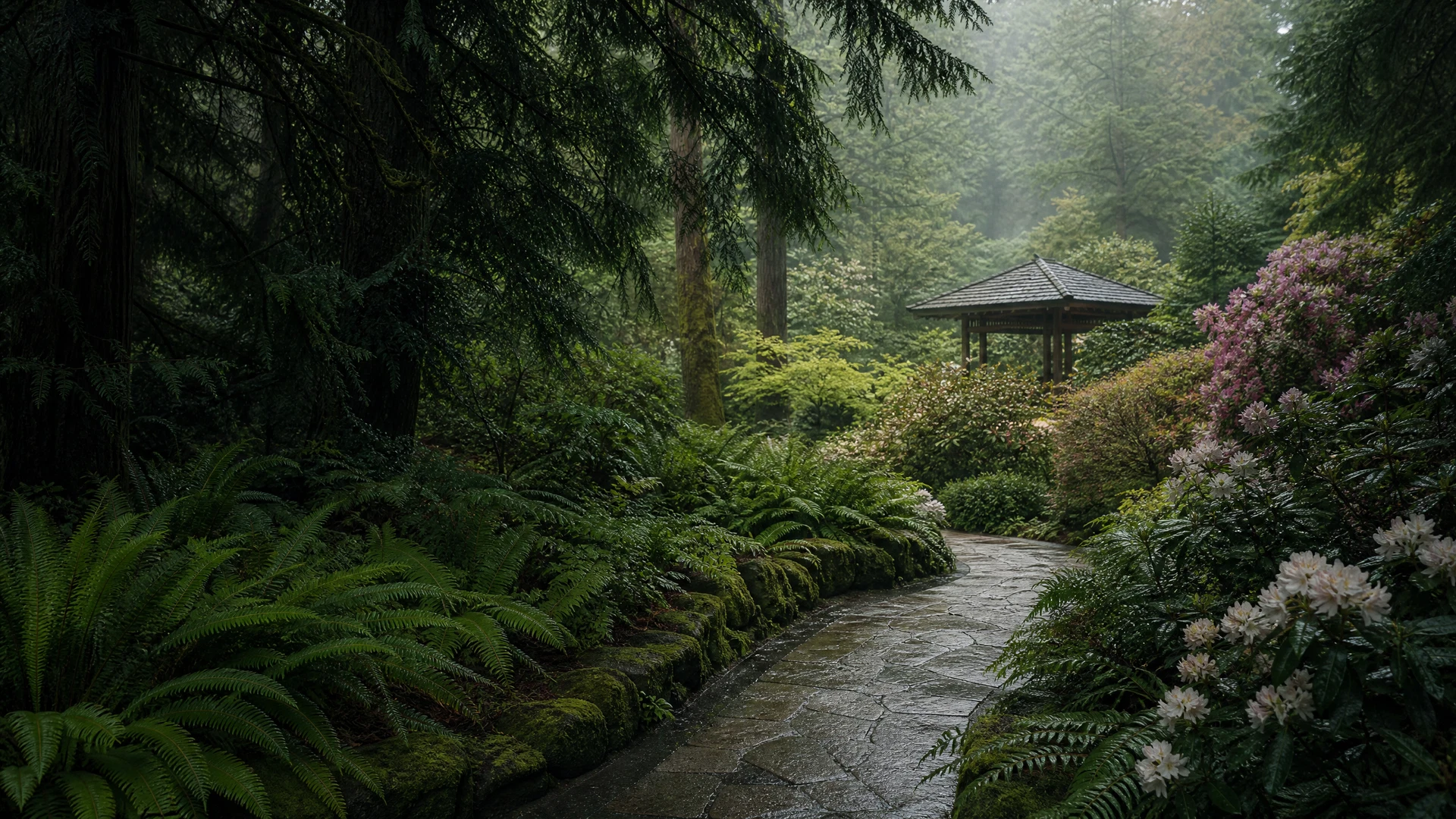
Pacific Northwest Wonders
Oregon Botanical Gardens: The Pacific Northwest's Green Crown
Ranked by the Japanese government as one of the most authentic Japanese gardens outside Japan, Portland's garden scene punches well above its weight.
BotanicalGardens.blog Editorial Team
Editorial research & source verification
Pacific Northwest seasonal guide
Oregon Month-by-Month Bloom Calendar
Cool, moist springs stretch the flower season, while rhododendrons, roses, and woodland collections provide a long sequence of color.
Garden color at a glance
Typical regional timingJan
Winter structure: conifers, bark, hellebores, and early witch hazel.
Feb
Winter structure: conifers, bark, hellebores, and early witch hazel.
Mar
Early spring: bulbs, cherries, magnolias, and camellias.
Apr
Early spring: bulbs, cherries, magnolias, and camellias.
May
Peak color: rhododendrons, azaleas, peonies, irises, and woodland flowers.
Jun
Peak color: rhododendrons, azaleas, peonies, irises, and woodland flowers.
Jul
Summer gardens: roses, hydrangeas, lilies, and perennial borders.
Aug
Summer gardens: roses, hydrangeas, lilies, and perennial borders.
Sep
Summer gardens: roses, hydrangeas, lilies, and perennial borders.
Oct
Autumn color: Japanese maples, grasses, berries, and late perennials.
Nov
Autumn color: Japanese maples, grasses, berries, and late perennials.
Dec
Evergreens, mossy paths, winter bark, and holiday conservatory displays.
Bloom schedules shift with elevation, microclimate, rainfall, and the previous winter. Use this as a regional planning guide, then check each garden's official bloom tracker or event calendar before making a special trip.
In This Guide
Oregon's Garden Legacy
Oregon's horticultural story is inseparable from its geography. The Willamette Valley — a 150-mile-long trough between the Coast Range and the Cascades — receives 40 inches of rain per year, has volcanic soils of extraordinary fertility, and rarely freezes hard enough to kill a Japanese maple. It is, in short, one of the best places in North America to grow temperate plants. The nursery industry recognized this early: Oregon is now the largest producer of nursery stock in the United States, shipping trees, shrubs, and perennials to every state in the country. Its botanical gardens are the public face of this horticultural expertise.
The Portland Japanese Garden is the most internationally recognized garden in the state — and arguably in the country. When the Japanese government wanted to evaluate the quality of Japanese gardens abroad, Portland's was the one they sent a delegation to assess. It passed. The garden's Cultural Village, opened in 2017 and designed by Kengo Kuma (the architect of the 2020 Tokyo Olympic Stadium), is the most significant addition to any American Japanese garden in decades. Shore Acres State Park, on the southern Oregon coast, is the opposite story: a timber baron's private estate that became a public garden after his fortune collapsed, now famous for its holiday light display and its improbable formal rose garden perched above the Pacific.
What makes Oregon's gardens distinctive is their relationship with rain. Unlike gardens in drier climates that fight for moisture, Oregon's best gardens are designed to work with perpetual dampness — the moss is cultivated, not tolerated; the stone darkens beautifully in wet weather; the reflections in the ponds are sharpest on overcast days. Visiting in November or February, when most tourists have gone home, is not a compromise. It is, for many plant people, the point.
Climate & Plant Diversity
The Cascade Range is Oregon's great botanical dividing line. West of it: maritime climate, 40+ inches of rain, mild winters, and the kind of lush green that makes visitors from drier states genuinely emotional. Portland sits in USDA Zone 8b — warm enough for camellias, magnolias, and Japanese maples to thrive outdoors year-round, cool enough that the gardens never look tropical or overdone. The Willamette Valley's volcanic soils are so fertile that the region produces more than half of the world's supply of grass seed. East of the Cascades, the climate flips entirely: high desert, cold winters, hot summers, and an entirely different palette of drought-adapted plants. Oregon's botanical gardens are concentrated in the wet west, where the growing conditions are exceptional.
Portland's specific microclimate is worth understanding before you visit. The city averages only 144 sunny days per year — less than Seattle, less than London — but its gardens are designed to be beautiful in rain and mist. The Portland Japanese Garden is arguably more atmospheric on a grey November morning than on a July afternoon: the moss is brighter, the stone darker, the reflections in the ponds more perfect. Oregon gardeners have long understood that the grey is not a limitation but a design condition, and the state's best gardens are built to work with it.
| Region | Climate Zone | Characteristics | Notable Plants |
|---|---|---|---|
| Willamette Valley & Portland Metro | USDA Zones 8b-9a | Mild, wet winters; warm, dry summers | Rhododendrons, Azaleas, Japanese Maples, Conifers, Roses |
| Oregon Coast | USDA Zones 8b-9b | Cool, wet, foggy; mild temperatures year-round | Coastal Pines, Sitka Spruce, Fuchsias, Heathers, Rhododendrons |
| Southern Oregon (Rogue Valley) | USDA Zones 7b-8b | Hot, dry summers; mild to cool, wet winters | Wine Grapes, Mediterranean plants, Oaks, Madrones |
| Eastern Oregon (High Desert) | USDA Zones 5a-7a | Cold winters, hot summers; very dry | Sagebrush, Juniper, Ponderosa Pine, drought-tolerant perennials |
Featured Botanical Gardens in Oregon
The Portland Japanese Garden is the most authentic Japanese garden in the Western Hemisphere — a designation the Japanese government has formally endorsed. On 12.5 acres in the West Hills, it contains eight distinct garden styles: the Strolling Pond Garden, the Tea Garden, the Natural Garden, the Sand and Stone Garden, the Flat Garden, the Momoyama-style garden, the Bonsai Terrace, and the Kashintei Tea House. The Cultural Village, opened in 2017 and designed by Pritzker Prize-winning architect Kengo Kuma, added 9,000 square feet of gallery and event space without disturbing a single established tree. On a misty morning in November, with the Japanese maples at peak color and the koi barely visible through the fog, this garden is one of the most beautiful places in the United States.
Historical Note: Founded in 1963 following Portland's sister-city relationship with Sapporo, Japan. Professor Takuma Tono of Tokyo Agricultural University — one of Japan's foremost landscape architects — was commissioned to design the original five garden spaces, which opened in 1967. The 2017 Cultural Village expansion, designed by Kengo Kuma (architect of the 2020 Tokyo Olympic Stadium), was the largest addition in the garden's history and cost $33.5 million. [Wikipedia]
The Oregon Garden in Silverton is the state's most ambitious public horticulture project: 80 acres, 20 specialty gardens, and a 400-year-old Oregon white oak that was growing before the Pilgrims landed. The garden irrigates entirely with reclaimed municipal wastewater — a practical demonstration of sustainable horticulture that has become a national model. The Gordon House, the only Frank Lloyd Wright-designed home in Oregon open to the public, sits on the grounds and is worth the trip on its own. The Children's Garden is one of the best in the Pacific Northwest, with a water play area, a treehouse, and a maze.
Historical Note: The Oregon Association of Nurseries conceived the garden in the 1940s as a showcase for the state's nursery industry — the largest in the US. After decades of planning, the City of Silverton donated 80 acres, groundbreaking happened in 1997, and the garden opened April 17, 1999. The Gordon House was relocated to the grounds in 2001 after its original site in Wilsonville was threatened by development. [Wikipedia]
Shore Acres is the most improbable botanical garden in Oregon: a formal English-style garden with a Japanese lily pond, perched on a sandstone bluff 75 feet above the Pacific Ocean. The 5-acre garden holds plants from around the world — including a rose-testing plot that evaluates new varieties for the American Rose Society — all maintained by a volunteer corps of over 1,500 people. From November through December, the garden hosts the Shore Acres Holiday Lights display, which draws over 100,000 visitors and uses more than 325,000 lights. On a clear day, you can watch gray whales migrating along the coast from the garden's clifftop viewpoints.
Historical Note: Shore Acres was the private estate of Louis J. Simpson, son of a Gold Rush-era shipping magnate, who built a 224-room mansion on the bluff in 1906. The mansion burned down in 1921; Simpson rebuilt, then lost the property during the Depression. He sold it to the State of Oregon in 1942 for $29,000. The US Navy used it as a radar station during World War II. The state began restoring the gardens in 1970, and the volunteer-run holiday lights tradition began in 1987. [Wikipedia]
Bush's Pasture Park
Bush's Pasture Park in Salem is one of Oregon's most underrated green spaces — a 90-acre urban park anchored by the 1878 Bush House Museum, one of the best-preserved Italianate homes in the Pacific Northwest. The park's rose garden, maintained by the Salem Heritage Rose Garden Society, holds over 2,000 rose plants including heritage varieties dating to the 1800s. The mature tree collection — some specimens over 150 years old — makes it one of the finest arboretum-quality urban parks in the state. Admission is free, and the park is open year-round.
Leach Botanical Garden
Leach Botanical Garden in Southeast Portland is the most botanically significant free garden in Oregon. Its founders, Lilla and John Leach, spent decades collecting plants throughout the Pacific Northwest and Alaska, discovering several species new to science in the process — including Kalmiopsis leachiana, a rare flowering shrub found only in the Siskiyou Mountains and named in Lilla's honor. The 16-acre garden follows Johnson Creek through a series of woodland habitats, with a particular strength in Pacific Northwest natives, ferns, and shade plants. It is free to visit and genuinely worth the detour.
Quick Comparison Table
| Name | Location | Founded | Acreage | Admission | Best For |
|---|---|---|---|---|---|
| Portland Japanese Garden | Portland | 1963 | 12.5 acres | Fee | Cultural Immersion & Serenity |
| The Oregon Garden | Silverton | 1999 | 80 acres | Fee | Family Fun & Horticultural Education |
| Shore Acres State Park Botanical Garden | Coos Bay | 1942 | 5 acres | Free (parking fee) | Scenic Views & Seasonal Displays |
| Bush's Pasture Park | Salem | 1877 (park est.) | ~90 acres | Free | Historic Charm & Rose Gardens |
| Leach Botanical Garden | Portland | 1930s (private), 1970s (public) | 16 acres | Fee | Native Plants & Woodland Trails |
Visitor Planning Tips for Oregon Gardens
- Dress in Layers: Oregon's weather can be unpredictable, especially in the western part of the state. Even on a sunny day, temperatures can change quickly, and coastal areas are often cooler and windier. Dressing in layers will ensure you're comfortable regardless of the conditions.
- Check Seasonal Hours & Events: Many gardens have extended hours or special events during peak blooming seasons (spring and summer) and holiday light displays in winter. Always check the garden's official website before your visit for the most up-to-date information on hours, admission, and any scheduled events.
- Embrace the Rain: Don't let a little rain deter you! Oregon's gardens often look their most vibrant and lush after a rainfall. Bring appropriate rain gear, and you'll discover a unique beauty that dry days can't offer. Many gardens also have covered areas or indoor conservatories to enjoy.
- Explore Beyond the Main Paths: While main pathways offer stunning views, many Oregon gardens feature hidden trails, secluded benches, and less-traveled sections that reveal unique plant collections or serene vistas. Take the time to wander and discover these quieter corners for a more intimate experience.
- Consider a Membership: If you plan to visit multiple times a year or explore several gardens, consider purchasing a membership to one of the larger gardens. Many offer reciprocal benefits, granting you free or discounted admission to other botanical gardens across the country.
Frequently Asked Questions
References
BotanicalGardens.blog Editorial Team
Editorial research & source verification
About the editorial team
BotanicalGardens.blog publishes as an editorial team. We do not claim individual credentials or first-hand visits unless a page identifies and substantiates them. Our process prioritizes official garden records, public institutions, and clearly named sources.
Editorial verification
This guide is researched from official garden pages, public institutions, and other named sources where available. Visitor details can change; confirm hours, ticketing, and accessibility directly with the garden before a special trip.
Read our editorial standards or report a correction at corrections@botanicalgardens.blog. Last reviewed May 19, 2026.